1. Don't run on a uneven dock--you will regret this.
2. Fishing by the dock is a frustrating and fruitless effort as dock fish have a PhD in human avoidance.
3. The reel of a fishing pole can suddenly fall off and hit you on the head while the boat is tackling rough waters...yes this happened to me.
4. Do not pack jeans...they occupy too much space and you will not use them.
5. Hawaiian Tropic sun block sucks...Copperton is totally the way to go!
6. Pandora on your phone is a gift while traveling...especially if it means serenading My Heart Will Go On to your best friend with the ocean as scenery.
7. Beach life makes for creative drink preparation...including the invention of new drinks like the Trouser Dropper (pineapple juice, Sprite, and coconut rum).
8. When sea turtles are out in the wild, they apparently look like muppets...this was really weird.
9. Fish like to wear lobster heads as masks...while they eat the lobster brains of course.
10. Sunsets on a boat in the Keys is an unforgettable sight.
I was so excited and amazed when I saw this website that I just had to share it. Teen Travel Talk is a website entirely dedicated to teens who travel to tell their stories.
I would have loved to travel at this age! I'm so glad there are teens out there who are benefitting from the expanded world view offered through travel and hope more teens (especially those who may not have parents that can finance it) have the opportunity to do so. Here's a blurb from the website:
Here you can read what other teenagers have to say about travel – from day trips to journeys abroad, shopping, eating, coasting, and other activities on vacation. Also, parents can read what teenagers like and dislike about family vacations and destinations so that they can plan a family trip that YOU will enjoy.
Teen Travel Talk is also interested in YOUR travel experiences. If you want to become a paid blogger and publish your travel stories on Teen Travel Talk, click “contact us” on the left hand side, fill out your contact information and tell us why you’d be a great teen travel blogger.
Find out more here: http://www.teentraveltalk.com/
All of her videos are pretty awesome, but I think this
series is particularly helpful. For 30
days Charlie is giving advice and insight on what it’s like to live and teach
abroad. Here’s one of the video from the series:
In my search for an article
unrelated to travel, I happened upon a fantastic Latina travel blog calledMochileras y Viajeras
(Women Backpackers & Travelers). It would be on a Latina website that I would find my home planet
for my feelings about travel. From the intro post by the creator of the blog,
Julie Sie, I was sold. Julie's description about her initial fears of travel
mirrored mine so closely when I started that she felt like a kindred
spirit:
[My translation] "Many years ago
I got into the mind, heart and body fascination for travel: short, long,
planned, aimlessly, in groups or alone ... and I needed some time to make the
decision to start.Gradually I discovered that what kept
me from traveling was FEAR . Yes, well capitalized and
bold because they were countless fears!, tiny concerns that wreak havoc
on your mind and paralyze you without you noticing.I worked through the concerns back and
forth in my mind: What will I do with my life?, Is it worth spending my savings
on a trip?, Where will I go, and how do I save money?, Is traveling alone a
good idea?, What if I get sick, and I get injured or something happens to me?,
How much money is enough?, What will happen when I return?, What if I don't
ever return? .... there were several concerns and not a single answer in
sight. I realized then that these
fears were based primarily on the NEED for control, comfort and safety most
women have been taught growing up . These three ideas that
society, our parents, teachers and even strangers have made us see as an
indispensable part of life and that we (without realizing it) have accepted as
absolute truths. " J.S.
I can't tell you how often I've read things about how women
shouldn't travel alone or that it's too dangerous for women to travel without
men. As Julie points out, the lessons many women learn from a young age prime
them to fear travel or to believe travel is irresponsible. I've even recently
experienced new gender related backlash to travel now that I'm married. I
recently went to NOLA with my best friend for a couple of days, and the most
common question in connection to the trip was "You went without Jesse (my
husband)?" Even my mother's aunt, who has travelled the world alone for
decades and never married, told my mom I couldn't travel anymore now that I needed
to worry about my esposo. I will say that my husband does support my love for
travel and is very supportive, but I definitely feel the pressure from others
to essentially stay in the domestic space. It relates back to Julie's note on
control and safety. Now that I have a husband, he is my protector, so why would
I ever choose to travel without him? There is also this strange belief that I
need to be with him 24-7 now to take care of him?1? I married my husband b/c he
is a fantastic, intelligent, and independent man—he doesn't need me to take
care of him.
I actually love to travel with my husband. He taught me to travel
and was the one who helped me overcome my fears, but I also want to the
experiences that come from traveling with friends or traveling alone. I have
trouble understanding why this is a problem to folks? It's interesting to see
how uncomfortable it makes people and I often wonder if this is why some
marriages fail. Couples choose, with people in their life supporting this
model, to meld into each other. I have been with this man for almost 10 years
and he is my best friend and the person I always prefer to spend my time with,
but I feel that way b/c I have never lost my independence in this relationship.
We each have our own interests, friends, and activities—making our time
together all the more special.
I think this is what I love the most about the Mochilera website.
If you look through the posts, it's not just young, single women describing
their travel experiences. It has several posts by mothers, older women, and
basically the "non-traditional" female world traveler. It reminded me
yet again that it's okay to travel alone, with my husband, with friends, or
even with my children one day if we choose to have them. It's about getting
over those fears (and always doing research of course) and taking the leap
despite peoples discomfort, unsolicited advice, and judgment.
Here's a short article from the Travel Writers Exchange by Janice Waugh on finding your niche topic for travel writing. I'm pretty sure mine would be Feminist Travel Writer or something to that effect, but that may be too niche. I would love to write feminist inspired travel guides of cities. Possible future project!
As a Feminist, I have often been a defender of some Disney Princesses like Ariel and Belle, who I feel, introduced me to feminist ideas early in life. However, even I can’t get behind the Bibbidi Bobbidi Boutique highlighted by Judy Dutton in Airtran’s GO magazine this month. On my flight home from visiting my mom, I was intrigued by the article titled “The Princess Complex,” but ended up mortified and frustrated.
The article focuses on various pampering opportunities for children when they travel with a focus on the Disney boutique. This opportunity to “transform” young daughters into princesses includes using the “magic of hair extensions,” make up, accessories, and of course the princess outfit complete with heels (34). While a mother describing her daughter’s hair as “mousy” and encouraging strangers to heavily makeover her 3-year-old child is worrisome, this was not the part that stuck out to me the most. There are three points of this article that I found highly problematic—Dutton’s use of feminism to justify these toddler makeovers, the author’s own conversion to “Princessland,” and the stereotypically gendered princess lessons.
Dutton has moments where she is clearly conflicted with these princess centered activities, but validates the makeover early on by essentially laying some of the blame on third-wave feminism, “Reasons for this royal craze range from Disney’s marketing ingenuity to third-wave feminists insisting girls can be pretty and powerful to parents’ desire for ‘safe’ role models in a unsafe world” (37). While one of the facets of the third-wave is a more nuanced look at the performance of gender (including wearing make-up), I feel confident that the third wave contributions of intersectionality, multiplicity of identity, and a broader definition of gender were not intended to encourage young girls to engage in privilege laden act of socially constructed self-beautification. Not to mention that there are plenty of safe role models beyond Disney, like Hilary Clinton, Alice Paul, Rosa Parks, and the multitude of other women that have made amazing contributions to the world throughout history. So why are moms still supporting this princess craze?
Before Boutique After Boutique
Just as young daughters get carried away in the fairytale mythology, so do some of the moms. Dutton explains this as her daughter excitedly waits to see Cinderella:
In spite of my qualms with fairytales’ wait-for-the-prince-and-everything-will-be-fine credo, I find myself entranced as I watch this seminal meeting unfold…The moment, I grudgingly admit, is magical for my daughter—and I’d be lying if I didn’t confess to a contact high myself. (37)
It was when I read this point that I remembered my own conversion to Brideland only months ago. In her 1994 article “Brideland,” Naomi Wolf describes the magnetic pull of the fairytale princess wedding and its ability to supersede feminist sensibilities or logical thought. Despite her repugnant feelings on weddings, she describes the eerie ease with which her conversion into the eager bride took place—a conversion I myself had to negotiate. When I read Dutton’s description of her “contact high,” I couldn’t help but see the similarities between what I now think of as Princessland to Brideland. Wolf describes how the fantastic elements and feelings of nostalgia enable a feminist to rationalize buying a dress reminiscent of Victorian times or even making extraordinary demands based on feelings of self-entitlement. Is this the same thing that happens in Princessland? Do you see your daughters’ clear elation and the general splendor of the fantasy environment and later rationalize it with your feminism? If Brideland is any indication of the power of gendered traditions, then the pull of Princessland land can’t be ignored and may even be a precursor to Brideland. More importantly, how does the conversion to Princessland prime youth, and potentially parents, to accept gendered lessons on behavior?
Reacting to her daughter’s excitement at meeting her “BFF” Cinderella, Dutton and her partner organize another princess meet up for her daughter. At this Epcot dinner, Dutton asks if the princesses can give her daughter some advice:
I ask if she has any life advice for my little princess. “Yes,” Cinderella says. “Always be home before midnight” (a lesson I [Dutton] enthusiastically endorse). Ariel from The Little Mermaid advises Indiana to “practice your singing and swimming.” Snow White, Sleeping Beauty and Belle from Beauty and the Beast all urge her to hold out for true love. (37)
My own love for Ariel and Belle led to vocal response of Oh My Dear God (to the confusion of the man sitting next to me on the plane) upon reading this section. Really Disney?!? You couldn’t think of better advice then to pursue socially sanctioned feminine activities and abstinence until prince charming comes along? So lets break this down—girls need to be home before midnight for their own protection, girls improve themselves through artistic pursuits and exercise, and girls must maintain their purity. What’s so frustrating about this to me is that Ariel could have said, “Be Adventurous” and Belle could have said, “Make sure you read and focus on school first.” This becomes even more upsetting when you remember that prior to this conversation, Dutton’s young daughter was thoroughly primed to listen to anything and everything her “safe” role models had to say. At the age of 3, Dutton’s daughter is already being taught the social “value” of self-beautification and the notion of staying “pure.” Furthermore, Dutton has negotiated this by saying that third-wave basically made this okay.
So what do we do with this as feminists? In terms of child travel options, Disney is still a top choice, despite the company’s role in supporting unfriendly policies for working families. As Dutton herself points out, her daughter is “one of thousands” of kids participating in the Bibbidi Bobbidi Boutique (37). So, how do we still travel to Disney without girls seeing princess everywhere they go? I remember that when I as young and going to Disney (as a native Floridian we went to Disney often) the princess focus just didn’t seem to be there in the same way. I remember begging my mom for 101 Dalmatian toys and gigantic lollipops, not a princess tiara. Any suggestions feminist travel moms?
When I first started travelling I would get terrible anxiety before boarding a plane. I'd start sweating and just close my eyes and listen to music as I prayed for a safe arrival. Thankfully, this is no longer the case. I get on planes so regularly these days I have become almost too calm on planes (I fall asleep a lot). I don't know what changed, but I do remember how terrible it felt to have that fear. That's why I'm sharing this article on Jezebel on creative ways to conquer your flyer anxiety.
"Many villages in the UK have turned red telephone boxes into mini libraries, just take a book and leave one behind. I really live in the wrong country..."
I am snowed in from work today and started exploring some articles about how families travel. I currently work with families and I noticed something very interesting about the ways our moms view travel. While finance plays a factor, it's often the belief that their children prevent them from having mobility. These are of course real barriers, so I decided to try and find out how other families do it.
To that effect, I have been trying to find resources and narratives by parents who travel with their children - especially young children. In my research, I found this fantastic article highlighted on MomsRising.orga couple of months ago titled "Traveling With an Autistic Child in Holland, Italy, France..." about two parents who have chosen, rather unconventionally, to travel the world with their autistic son. It is a fantastic piece and I highly recommend it! Please make sure to check our the links provided in the article.
When thinking about traveling with your kids, a good place to start is to see how other families have done it. In addition to the info above, Circle of Momshave a list of travel blogs written by parents. Some of the parents have small children while others focus on going abroad with teens. There are families of various sizes and perspectives, so if your a parent who wants to travel, you have a lot of options for insight and guidance. You can even follow some of these bloggers on facebook (ex: TravelingTek) to get additional tips.
I feel as if I have become a stereotype.
I am now a married woman working in a job in which I have exactly 5 hours of
vacation time I can use with a mountain of bills. Everyone seems convinced that
I should be focused on reproduction, but all I can think about is how I want to
be writing in coffee shops and exploring new areas. My desperation to travel is
only getting worse, so I decided to take matters into my own hands and at least
take a step in the right direction.
Soooo I have done two things. The
first is that I am volunteering for Hosteling International. My first day will
be tomorrow and I am both excited and nervous. Two Monday nights a month I will
be going to their DC hostel after work to cook dinner for travelers. What if I
am so awkward they ask me never to come back? What if I get lost and get there
really late? What if I ruin the pasta? Not sure how I would manage that second
one, but you never know. For those of you in that same “I’m stuck here for now”
boat, I thought this would be a great way to at least get back one of the
wonderful things I miss about traveling—getting to know folks from different
places and walks of life. I was actually surprised by how many volunteer
options HI has all around the US. Other volunteer options included giving
tours, organizing activity nights, and some locations even offer the opportunity
to teach travel classes. I fully encourage any lover of travel to consider them
as a place to volunteer.
The second thing I’m doing is much
more exciting even if success is improbable. This month I am going to work on a
submission for the World Nomads travel scholarship. My wonderful husband told
me about it and I am excited at the possibility of spending time in China with
the intent of being a travel writer. It’s a long shot, but at least I feel like
I’m doing something to change my non-itinerant status in life. I am open to
suggestions on what else I could do, so if you have any tips please share!
Read my article for the examiner about books women might consider reading when everyone is telling them to stay home because travel is "unsafe" for women. I'm finishing up the Lost Girls this week (my reading schedule was derailed this week because of work) and I am also planning a piece on how to take a Hunger Games themed trip and a discovering Zora trip. See you soon!
"She
[Buchi Emecheta] writes her novel in bits and pieces while her children are still asleep or not so quietly playing" -
Alice Walker
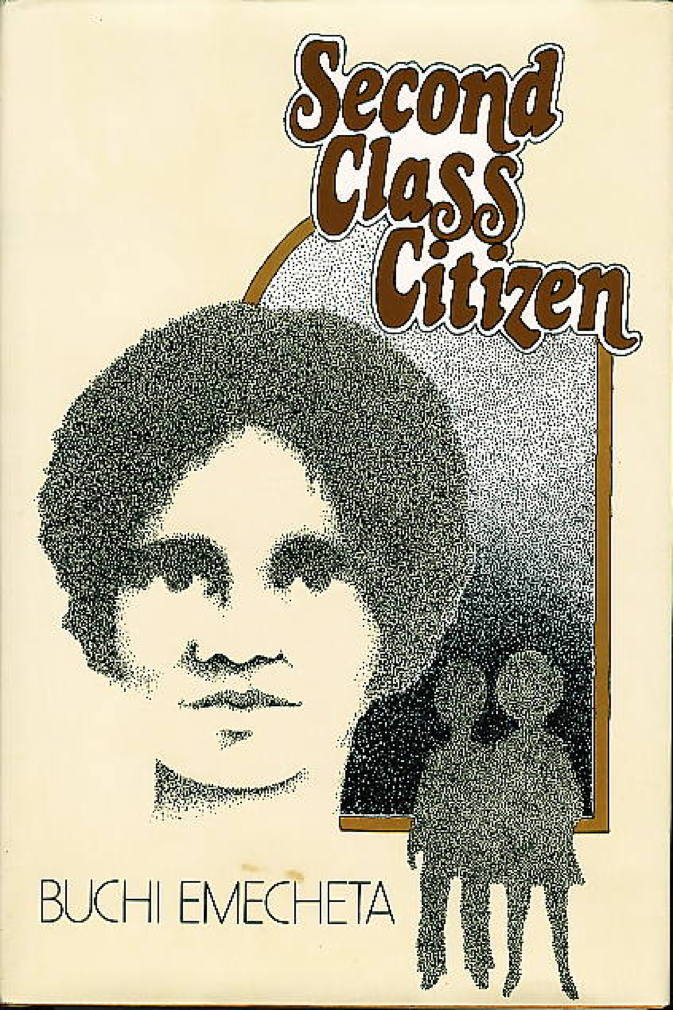
Alice Walker’s essay “A Writer Because of, Not in Spite of, Her Children” from her collection In Search of Our Mothers' Gardens considers the relationship between children and women’s ability to write or work. She describes how she had trouble understanding Buchi Emecheta’s dedication in her novel Second Class Citizen:
“To my dear children, Florence, Sylvester, Christy and Alice, without whose sweet background noises this book would not have been written” (67).
I admit that like Walker I have trouble understanding the idea that a child’s “noises” would facilitate the writing process. Children are often socially viewed as a heavy responsibility in which mother’s must sacrifice themselves and their dreams for their children, and by extension experience a loss of self. A women’s identity becomes “mother” and little else as all other identity markers become connected to motherhood (working mom, soccer mom, super mom, etc.). Despite having read Walker’s article years ago, I admit that I still had trouble viewing motherhood separate from terms of self-sacrifice. I didn’t really believe that mother’s could be mothers and still follow creative pursuits—let alone vigorously travel. That's changed though. For some time now I've been working almost exclusively with mothers in the mentoring program I manage. During our events, I've seen our their capacity to work while their children gurgle, fuss, play, and even scream. Just the other night at one of our evening events, after an entire day of working and coming home to a fussy child, this mother managed to still complete our creative writing project while simultaneously caring for her son. Not only did she complete the assignment, but also managed to engage her peers I detailed critical thought. It was an amalgamation of these thoughts, readings, and interactions that made me so thrilled when I saw a considerable amount of stories by women traveling abroad with their children.
In Laura Fokkena’s essay “Watching Them Grow Up” she discusses how having a child changed the way she traveled in Egypt: “Despite my marriage to Bassel, an Egyptian I’d met during my first trip, my status as a khawagayya (a foreigner) had always superseded any other claim I might make about my identity. This time, my American passport was secondary. My main role was that of wife, young mother, and grieving daughter-in-law” (121). The role of mother to an Egyptian child enriches Fokkena’s experience in Cairo. While she is still an outsider in many ways, having her daughter grants her privileges in a society that values her first as a mother. More importantly however, in traveling with her daughter the author is asked to re-imagine motherhood and the role children play in the lives of adults. At one point, Fokkena insists they should move into their own place since they are staying in Egypt for a while longer. Her husband resists, but she maintains that Rakaya is a burden on the older women of the family. What she comes to understand though is Egyptian views on children differ from her own American perspective: “Children keep you company. They’re not a burden. All of my husband’s female relatives were professionals, but work was secondary to their duties as daughter, mother, sister, wife. The same was true for men…” (128). The roles of women mesh together as opposed to compete against each other.
http://www.hipmama.com/
It’s essential to consider though that these roles can be fluidly integrated because parenting is the responsibility of the community and not just the father and the mother. Instead of a mother having the “double shift,” all the women and men share in the responsibility at various levels: “In Egypt, taking care of the baby was a shared endeavor. Auntie Zuzu encouraged me to use my newfound free time to study, and I did. Despite all the upheaval, I managed to finish two research projects…” (126). Traveling with her daughter becomes an experience of self-reflection, growth, and allows Fakkema to see the value of a community of women. In the end, her daughter doesn’t keep her from traveling or working, but in fact enables her to have a more complex and rich experience in Egypt.
In her essay “Conversation’s in Denmark,” Lesley-Ann Brown (like Fakkema) describes how traveling with her son enables her participation in a community of mothers. Brown starts by describing how the racial tensions in Denmark make her feel uncomfortable as an African American woman, but she connects to a group of women (some Denmark natives and other’s are not) whose discussions range from race relations in Denmark, parenting in America versus parenting in Denmark, universal healthcare, gender roles, and more. Brown suggests that had it not been for her son and the mothers, she would have had difficulty navigating Danish culture. Like Fokkena, she also describes how childcare is more of a community effort: “When I first arrived, she [friend] was always there to take me around the city, and when I was pregnant, she used to accompany me to the doctor when Benjamin was unable to. She even baby-sat Kai so that I could write” (256). Again, in this instance, having a child while traveling improves the experience as opposed to preventing her ability to travel.
This is what I most enjoy about these essays—they provide an alternative view to the responsibilities of parenting from the normative conversations about motherhood. They help the reader view motherhood as a role that not only enhances ones life, but also encourages spaces of feminist discourse and collaborative communities of women. These women don’t travel despite their children, but with their children.
“There is so much about my fate that I
cannot control, but other things do fall under the jurisdiction. I can decide
how I spend my time, whom I interact with, whom I share my body and life and
money and energy with. I can select what I can read and eat and study. I can
choose how I'm going to regard unfortunate circumstances in my life-whether I
will see them as curses or opportunities. I can choose my words and the tone of
voice in which I speak to others. And most of all, I can choose my
thoughts.”
–Elizabeth Gilbert
During my first post I mentioned my current restlessness for
travel. Well, that same feeling is what fuelled my desire to sign up for
weeknight night Flamenco classes. I may currently be unable to control my
in-itinerant status, but I can choose how I spend my time in the
interim. I have been interested for some time, but it’s the first time I’ve
been able to actually sign up. My relationship with flamenco currently ranges
from excitement to momentous self-loathing to guilt for lack of practice, which
inevitably leads to deeper self-loathing. It turns out I am deeply terrible
thus far, but I think my abysmal learning pace is perfect as it forces me into
a position discomfort I find essential for growth as I discussed in my previous
post. I also need to learn patience…really I need to learn to be more patient
with myself. I insist then on learning flamenco even if it means I take the
beginners class multiple times (hopefully extra weekday practices with a friend
will save me from too many beginners classes).
I know that the real problem is I have to practice more, so
without an ounce of the romanticized impromptuness one imagines as part of the
flamenco style, I have taken to writing down the steps (typical student mindset
on my part) immediately after leaving class so I don’t forget how to practice
the steps. This week the dance was as follows:
-Instructor
Sings: La la la la ley ley ley la…
oRight
foot stomp with right arm extended outward
oLeft
foot stomp with left arm extended outward
oArms
up while right foot goes over left foot for 360 turn
oFour
side hip swing stomps to the right ending with left toe tap
oFour
side hip swing stomps to the left ending with right toe tap
oFour
side hip swing stomps to the right (no toe)
oTwo
slow hip sways while turning into a circle followed by four quick hip sways
followed by two slow hip sways (having done a 360 turn to the front in the
process)
oStomp
left leg with right leg extended out while doing torso arm swing towards the
left
oStomp
right leg with left leg extended with torso arm swing towards the right
oArms
extended and come down—right foot stomp followed by left foot stomp (have no
idea if this part is right…so maybe this part will include some improvisation
on my part)
oStomp
right leg followed by left leg shoe shuffle to the right followed by right heel
tap and left heel tap. While doing the foot work, right arm is extended above
(supported from back—must do this correctly) and is brought down to meet the
left leg as it comes up.
oStomp
left leg followed by right leg shoe shuffle to the left followed by left heel
tap and right heel tap. While doing the footwork, left arm is extended above
and is brought down to meet the right leg as it comes up.
§Note:
These two moves are alternated as you go in a circular motion of 8
counts—hitting all 8 corners of the room.
oLast
step for now—end with right foot stomp followed by left foot moving across the
floor in a semi circle and then two small foot taps (right then left)
Just reading my own post makes me want to break into a
nervous sweat, but what I most enjoy about the class is how the instructor
insists on empowering the way women view their bodies through flamenco dance.
Each class she tells us her students not to be shy with flamenco. We have to be
“divas” and “embrace our sexuality” as beautiful women. “Don’t be afraid to
push your chest out—this is no time to be modest” or “don’t be afraid to be
sexy women!” I’m not sure flamenco will cure my restlessness, but maybe it’s
actually a feminist undertaking that will encourage me to have further
awareness of the politics and location of my own body.
I wonder what it would be like to learn something new
abroad? I read Eat, Pray, Love last
summer while traveling (much better than the movie by the way) and I remember
having a learning purpose for each place seemed to help the author adjust in
each location. In Italy she took Italian language classes, in India she learned
techniques to develop her own spirituality, and in Bali she had sessions with
the medicine man on attaining balance. Most importantly though her choices in
what she learned involved some prep time while she was still residing in the
states. Before going to Italy for the first part of her trip, Gilbert describes
how she had learned some Italian before taking more advanced course in Italy.
Maybe this is the ultimate positive way to view my flamenco class—this is just
the first step to get me ready until I can take classes and learn advanced
flamenco in Spain. In that case, next order of business is to find a Portuguese
language class so I can spend some glorious months in Lisbon. Better yet, maybe
I can learn how to play Fado…actually this may be a bit less realistic seeing
as currently don’t know how to play a instrument…Portuguese it is!
Texts Used:
Gilbert, Elizabeth. Eat, Pray, Love: One Woman's
Search for Everything Across Italy, India and Indonesia. New York: Penguin Audio, 2006. Print.